
Heavy rainfall in Delhi led to widespread waterlogging, traffic disruptions, and a significant drop in minimum temperatures across the city. Key areas like Lutyens' Delhi, Supreme Court, and AIIMS were affected, while the air quality remained satisfactory.

Heavy rainfall in Delhi led to widespread waterlogging and severe traffic congestion, bringing the national capital to a standstill, with the India Meteorological Department issuing a red alert for further heavy rain.

A five-storey PG accommodation in Satya Niketan, South-West Delhi, collapsed, trapping numerous students and raising immediate concerns about building safety and construction standards in congested areas. Residents reported a "sudden tremor" and rushed to assist in rescue efforts, highlighting the precarious state of old buildings converted into student housing without proper maintenance or structural checks.

Heavy rainfall caused significant waterlogging in New Delhi, particularly near IGI Airport, just days before the BRICS Summit. The incident highlighted coordination issues among various city agencies, with PWD officials attributing some flooding to other departments, despite a recent review meeting by the Lieutenant Governor to ensure inter-agency synergy.

Heavy rains lashed Delhi, triggering waterlogging and traffic disruptions across several parts of the national capital.

Delhi's Indira Gandhi International Airport experienced waterlogging at its Terminal 2 and 3 approach roads and forecourts due to heavy rainfall. While the accumulated water was cleared, the severe weather conditions led to the diversion of at least nine flights to other cities like Jaipur, Lucknow, and Ahmedabad. The India Meteorological Department had issued a red alert for intense rainfall in the national capital.

An 18-year-old man, Ankit, went missing after being swept away by rainwater in a drain in southeast Delhi's Priyanka Camp area during heavy downpour. A large-scale search operation involving rescue teams from the Delhi Disaster Management Authority and Delhi Fire Service is underway, but he has not yet been traced.

A recent building collapse in Satya Niketan, Delhi, which killed seven people, has brought to light the dire living conditions faced by students in paying guest (PG) accommodations near Delhi University's South Campus. Due to a severe shortage of on-campus hostels, students are forced to pay high rents for cramped rooms with poor ventilation, inadequate facilities, and sub-standard food. The article details student experiences with non-functional amenities, mandatory food charges for poor quality meals, and the lack of support from student bodies, highlighting a systemic issue in student housing.

The New Delhi Municipal Council (NDMC) is establishing a 24x7 command centre and implementing extensive civic preparations to ensure the smooth hosting of the 18th BRICS Summit. These measures include enhanced sanitation, beautification, traffic management, and coordination among various agencies to present a welcoming city for world leaders.

Is there a bigger event in India than the arrival of the rains?

Heavy rainfall has severely impacted Uttar Pradesh, Jharkhand, and Uttarakhand, leading to casualties, widespread flooding, and significant disruptions. The Char Dham Yatra was suspended, flights were cancelled, and standing crops were damaged. Other regions like Himachal Pradesh, West Bengal, Rajasthan, and Delhi also experienced varied weather conditions, including snowfall and light rains.
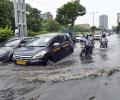
Some of the stretches and areas where waterlogging was seen included Dhaula Kuan, Mathura Road, Moti Bagh, Vikas Marg, Ring Road, Rohtak Road, Sangam Vihar, Kirari and near Pragati Maidan among others.

The Bareilly administration has initiated comprehensive measures to enhance flight safety around its Air Force station. These steps include stricter monitoring of drones, addressing bird activity, regulating unauthorised construction, improving waste management, and controlling stray animal populations, all identified as potential threats to aircraft operations.

Heavy rain lashed Delhi, leading to waterlogging and traffic disruptions. The IMD issued an 'orange' alert, warning of more rainfall.

Torrential rains have caused widespread devastation across several Indian states, leading to at least 11 deaths in Assam and Uttarakhand, pushing rivers above danger levels, and disrupting daily life with landslides, floods, and school closures. States like Jharkhand, Uttar Pradesh, Himachal Pradesh, Delhi, West Bengal, and Jammu & Kashmir are also grappling with the monsoon fury, while Meghalaya faces an unusual rainfall deficit.

Bengaluru golfer Khalin Joshi has significantly extended his lead to seven shots at the J&K Open, finishing day two at 13-under 129. His bogey-free round of 66 included three birdies and an eagle, leaving competitors Rashid Khan and Angad Cheema trailing. The tournament saw 50 players make the cut at one-over 143, despite a shortened hole due to waterlogging.

Delhi Chief Minister Rekha Gupta has directed officials to ensure the transparent and timely implementation of welfare schemes announced in the budget, warning of potential fund reductions for departments failing to utilise allocated budgets effectively.

Heavy rains lashed Delhi, leading to a red alert, traffic snarls, and waterlogging. The IMD predicts continued rainfall.

Torrential monsoon rains unleashed widespread destruction across several parts of the country on Thursday, inundating roads, uprooting trees, damaging property and disrupting normal life as authorities scrambled to restore normalcy.

The IMD has red and orange alerts for the hours ahead.

Heavy rainfall has caused severe waterlogging across Mumbai, disrupting traffic and daily life. The India Meteorological Department issued a red alert for Mumbai and surrounding districts, advising precautions. Specific areas recorded over 200 mm of rainfall, and the IMD forecasts continued heavy rains for the Konkan region, Goa, South Gujarat, Odisha, and Central India.

The southwest monsoon has advanced across northern Indian states, leading to widespread rainfall, waterlogging, road blockages, and rain-related deaths, particularly in Himachal Pradesh and Rajasthan. The Centre is monitoring the situation, especially concerning potential drought conditions in some areas due to the El Nino effect.

Vehicular movement came to a virtual halt as motorists were stuck in serpentine jams at almost all the arterial roads across the capital tonight following heavy rains that led to waterlogging and breakdown in traffic signals.

Delhi continued to reel under massive traffic jams due to waterlogging as heavy rains lashed the city for second consecutive day on Saturday flooding several arterial roads and leaving commuters stranded for hours while exposing civic bodies' lack of preparedness to deal with the perennial problem.

Mumbai experienced heavy overnight monsoon rains, with some areas receiving over 200 mm in 24 hours, leading to widespread waterlogging, traffic congestion, and disruptions in suburban train services, particularly on Central Railway lines due to a track cave-in.

Monsoon rains have unleashed widespread destruction across India, claiming seven lives in Himachal Pradesh and Karnataka due to landslides and floods, while heavy downpours have disrupted normal life and triggered red alerts in Maharashtra and other regions.

As many as 12 flights were diverted at the Delhi airport between 3 pm and 4 pm due to adverse weather conditions, an official said.

Most north Indian states reported below-normal temperatures on Monday, with rain and thunderstorms lashing parts of Uttar Pradesh, Rajasthan, and Himachal Pradesh. The southwest monsoon is expected to arrive in Kerala in the next two to three days.

Delhi Chief Minister inaugurated infrastructure projects focused on improving drainage, road connectivity, and traffic flow in Delhi, including stormwater drain remodelling, road construction, and a new healthcare facility.

Heavy monsoon rains have severely impacted Mumbai and its surrounding areas, leading to landslides, suspension of train services, and at least 13 fatalities over the past few days. The Mumbai-Pune Expressway was also shut due to a concrete pillar collapse and waterlogging.
The rain gauges at the Safdurjung MeT station measured 9.5 mm of showers for a period of 24 hours till 8:30 am while Palam station recorded 56.8 mm during the same period.

The NEET-UG re-exam was held at centres across the country and overseas on Sunday amid tight security arrangements for the smooth conduct of the examination.

This incident comes weeks after the death of 27-year-old software engineer Yuvraj Mehta, who drowned after his car fell into a waterlogged pit near a construction site in Noida Sector 150 on the intervening night of January 16 and 17.

A seven-year-old boy drowned in a waterlogged park in New Delhi in Rohini's Sector 20, officials said on Sunday.

The India Meteorological Department said Delhi recorded 139 mm of rainfall, the highest one-day rain for August in at least 13 years.

Delhi cabinet minister Parvesh Verma launched a sharp attack on the previous AAP government, alleging failure to carry out basic civic works over the past decade, leading to issues like garbage mountains, broken roads, pollution, and Yamuna cleaning.

Heavy overnight rain and morning showers caused widespread waterlogging and traffic congestion in Delhi, leaving commuters stranded and facing significant delays.

The Delhi government is likely to take disciplinary actions against officials responsible for waterlogging at the Minto Bridge underpass after overnight showers. A junior engineer and pump operator responsible for the underpass will be suspended and the assistant engineer will be issued a show cause notice for supervisory lapses.

Yamuna floodwater caused massive traffic jams in Delhi, disrupting morning rush-hour traffic and leaving commuters stranded for hours. Key stretches like Kashmere Gate, Ring Road, and Kalindi Kunj were heavily congested.

A thunderstorm accompanied by heavy rain battered Delhi overnight, disrupting flight operations, uprooting trees and electricity poles, and causing waterlogging in several areas while bringing relief from stifling heat. The sudden change in weather led to a sharp drop in mercury with the city recording a minimum temperature of 19.8 degrees Celsius, 6.9 notches below the normal. The India Meteorological Department said the city's primary weather station at Safdarjung recorded winds gusting up to 82 kmph and 81.2 mm of rain in six hours -- between 11.30 pm and 5.30 am.
